
In this blog, I would like to take you on a journey through Southeast Asia’s central region, Malaysia, a country long renowned for the pleasures of its diverse food, rich culture, and striking scenery.
My journey began a few years ago when I first visited Sabah. I hiked Mount Kinabalu and ate my way through the city of Kota Kinabalu.
Since then, I have made further forays across the country, visiting Melaka, Johor, Kelantan, Penang, and Langkawi, always returning to the modern capital, Kuala Lumpur. Along the way, I wandered through old city lanes and lingered in restaurants of every kind.
I cannot remember exactly when the idea of writing a blog first took root in my mind, but it grew in earnest after I was captivated by Malaysia’s way of life — its glorious food. Through close friends, I came to understand what food truly means to Malaysians, from the kitchens where it is prepared to the spirited family dining tables where it is shared. In time, I fell in love not only with the food itself but with the extraordinary gastronomic culture that surrounds it.
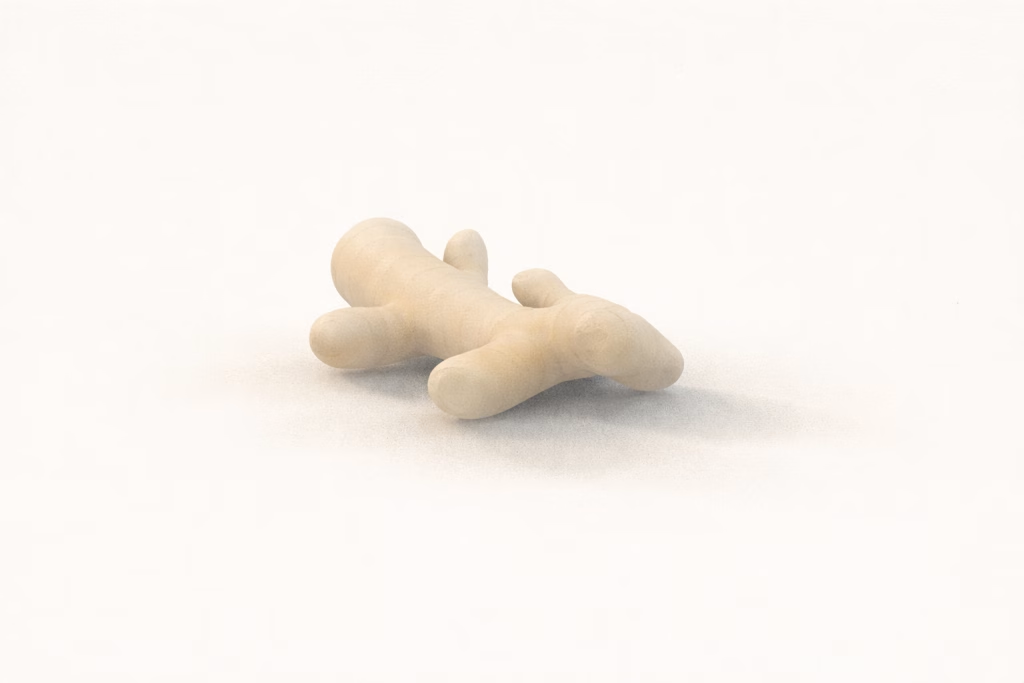
Many of Malaysia’s most celebrated dishes rely on a generous use of aromatics. Across the country, delicious food and rich culinary traditions are shaped by farmers and home cooks alike. The love of good food is not confined to wealth or status.
Malaysian cooking ranges from rustic home food to street snacks and elaborate banquet dishes. It embraces a vast spectrum of flavours, from the understated beauty of rice to the outrageous pungency of durian. Across the country, striking regional differences emerge from the sweetness of Kelantan to the seafood-driven dishes of Sabah.

Famous local dishes are legion: Nasi Lemak, the national dish of fragrant coconut rice with sambal, anchovies, peanuts, cucumber, and egg; the incomparable dry Bak Kut Teh, where pork ribs and belly are reduced in a thick herbal soy glaze with dried squid, chillies, and lady fingers; and many more besides. These dishes are bound together by Malaysia’s rich mix of ethnic origins.
Even now, I often find myself reminiscing about these flavours and yearning for another encounter. Malaysian cuisine, in all its diversity, has a charm of its own. I know of no other cuisine that brings together such an extraordinary range of dishes. Its flavours are rich and deeply satisfying, famed for the use of coconut milk and a remarkable array of aromatics and spices. Ultimately, a good Malaysian meal should leave a person feeling happy, sated, and fulfilled.